
ENGLAND
The flag of England comes from St George's Cross. The reason6 of the red cross as an emblem of England can be traced back to the Middle Ages. There is a tradition that say that Richard the Lionheart himself adopted both the flag and the patron saint from Genoa at some point during his crusade. in fact it says that In 1190 he requested and obtained the possibility to use the flag for the crusade, to have their ships protected by Genoese fleet in the Mediterranean Sea from the numerous pirate attacks.
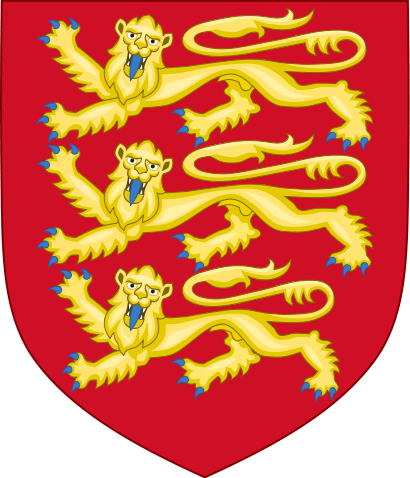
Royal Arms of England, The English coat of arms was introduced by King Richard I of England in the 1190s, apparently as a version of that of the Duchy of Normandy (Normandy today uses only two leopards, although the historical version is identical to the English coat of arms). According to a tradition, after the conquest of the Normandy was added a third Leopard to the two Normans to represent the United Kingdom Anglo-Norman. According to another tradition the two leopards were combined to a single lion of Aquitaine with the acquisition of this by the English Crown. Other experts say that at the beginning the number of leopards was not fixed and it is only a reason of design if the British coat of arms ended up having three leopards (now called lions) and that of Normandy two.
GEOGRAPHY OF ENGLAND
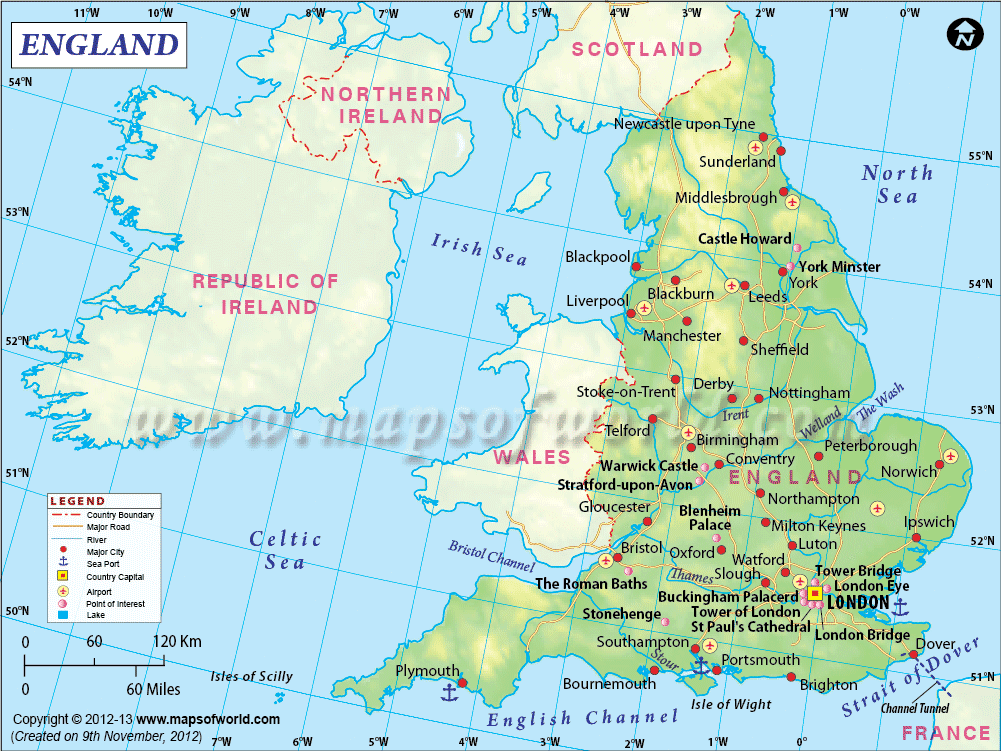
England includes most of the central and southern two-thirds of the island of Great Britain, in addition to a number of small islands. England is bordered to the north by Scotland, to the west by Wales, celtic sea and irish sea and to the east by the north sea. it is divided from France only by a 33 km sea gap, the English Channel.
The North of England is generally mountainous, in fact it is crossed by The Pennines that divide east and west . In the west there are the Cumbrian mountains, they offer beautiful countryside ranging from lakes to wild open moors, isolated villages and sheep farms. This area is famous for its factories, coalmines and industrial cities: Sunderland and Newcastle for shipbuilding, Sheffield for Steel andManchester for cotton. These industries went into decline and many of them were closed down after World War II. These cities have had a big economic revival, becoming centers for culture and tourism as well as for new businesses and enterprises.
The East of England is the lowest and flattest region of England, much of it is barely above sea level . The Fens are partly in North Cambridgeshire which is notable for the lowest point in the country in the land of the village of Holme. It is an important agricultural area, mostly for cereals and vegetables. There are also some important fishing ports and Felixstowe is the largest container port in the country. Cambridge is famous for its world-renowned university and around the city there are a lot of high-tech business, particularly in the fields of software, electronics and biotechnology.
The Midlands is an area of mostly flat land. Upland areas lie in the west and north of the region with the Shropshire Hills to the west, close to the Welsh border, and the Peak District area in the north of the region. It is also an important agricultural area. Birmingham, the biggest city, was an important centre during the Industrial Revolution with other industrial cities asCoventry, Derby and Leicester. It is linked to London by a large network of canals which were built to transport goods from this busy industrial area to the capital.
The south of England is characterized by gentle hills, fertile farmland, quaint villages,historical cities and landmarks. The River Thames flows across southern England. In the south west of England there are rocky coastlines and high moorland areas. The south coast is a popular tourist destination and also has important ports such as Southampton and Portsmouth
The United Kingdom has a temperate climate, with heavy rainfall for all the year. The seasons are quite variable in temperature, however temperatures rarely fall below −5 °C or rise above 30 °C .
ECONOMY OF ENGLAND
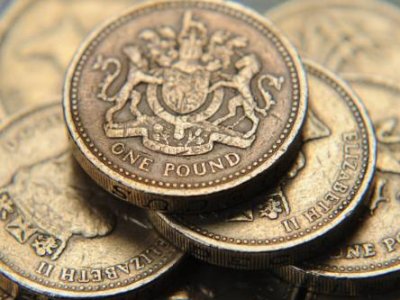
The economy of England is the largest economy of the United Kingdom. England is an highly industrialized country. It is an important producer of textiles and chemical products. Also automobiles, locomotives, and aircraft are England's other important industrial products, a significant proportion of the country's income comes from the City of London. Since the 1990s, the financial services sector has played a significant role in the English economy and the City of London is one of the world's largest financial centers. Banks, insurance companies, commodity and futures exchanges are heavily concentrated in the City. The British pound sterling is the official currency of England and the central bank of the United Kingdom, the Bank of England, is located in London.
LONDON
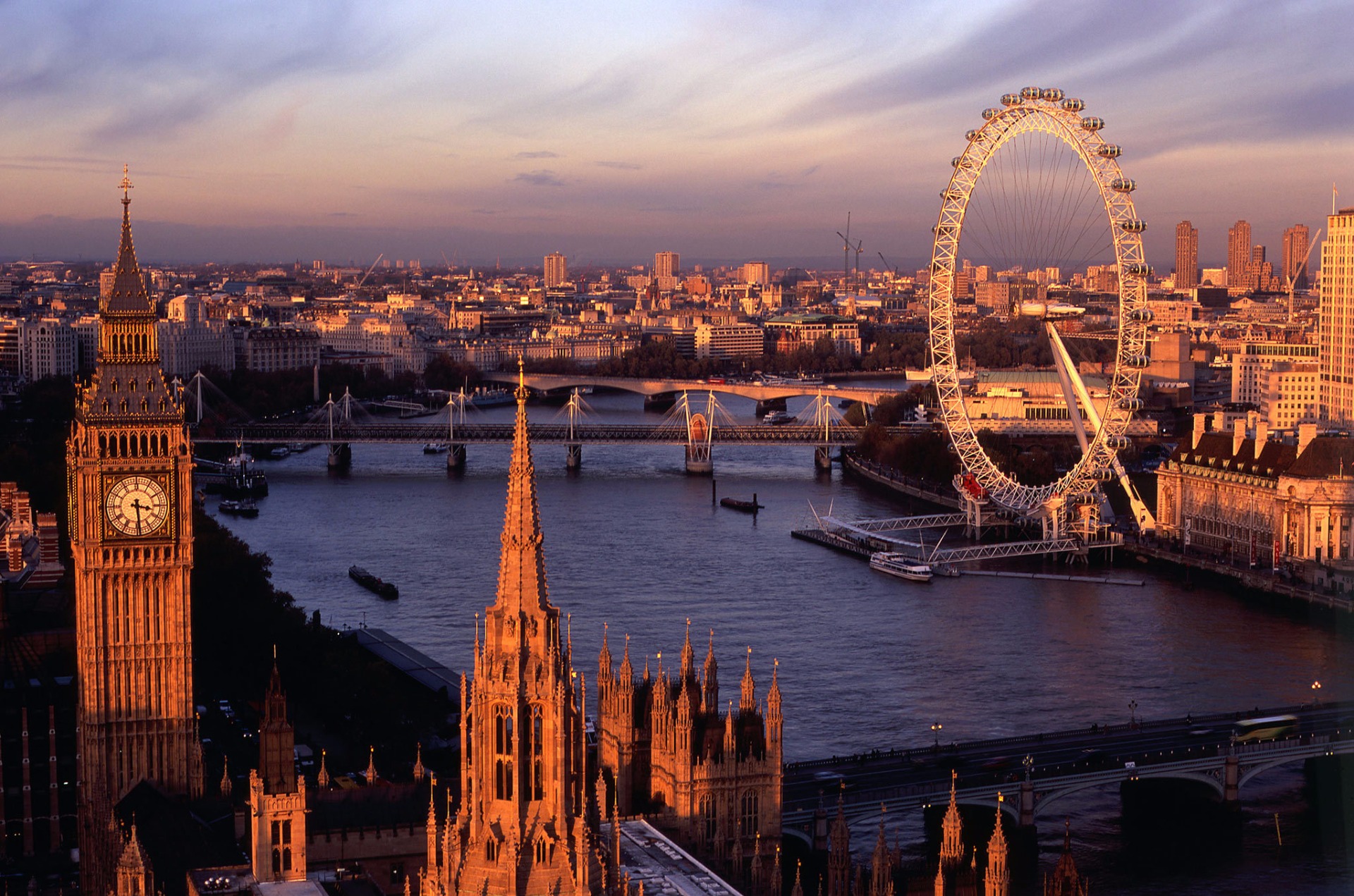
London is the capital and most populous city of England and the United Kingdom, as well as the most populous municipality in the European Union. Standing on the River Thames in the south east of the island of Great Britain. It was founded by the Romans, who named it Londinium. London's ancient core, the City of London, is today the center of every financial activity. It is one of the world's leading financial centres. In London live a lot of people of different culture. London contains four World Heritage Sites: the Tower of London; Kew Gardens; the site comprising the Palace of Westminster, Westminster Abbey, and St Margaret's Church; and the historic settlement of Greenwich in which the Royal Observatory, Greenwich marks the Prime Meridian.